Every single morning, long before the rest of the city wakes up, Jaipur’s street vendors are already at work. From the fresh fruit sellers at local markets to the fast-food stalls filling the air with the aroma of hot pyaaz kachoris, these micro-entrepreneurs form the invisible economic pulse of our capital city.
Yet, despite being the true heartbeat of the urban economy, street vendors have historically faced a harsh reality. Lacking formal financial documentation or permanent retail properties, they were locked out of the regular banking ecosystem. When they needed urgent money to restock raw materials or expand their carts, their only choice was to borrow from local moneylenders at high, unfair interest rates.
This traditional bottleneck is undergoing a major shift. Under the leadership of Chief Minister Bhajanlal Sharma, the central PM Street Vendor’s AtmaNirbhar Nidhi (PM SVANidhi) scheme is being implemented effectively across the state. Spearheading this economic transformation on the ground is the Rajasthan Industry Minister, Col. Rajyavardhan Singh Rathore.
By treating micro-vending as a foundational layer of the economy, the Cabinet Minister in Rajasthan is helping push thousands of roadside traders out of debt loops and into a structured, dignified financial future.
1. Collateral-Free Capital to End the Cycle of Exploitation
The core pain point for any small-scale hawker or thelewala is accessible working capital. PM SVANidhi addresses this directly by offering a step-by-step credit pipeline that completely bypasses the need for property collateral or complex credit scores.
The model operates in clear, manageable tiers:
- First Tier: A working capital credit line starting at ₹15,000.
- Subsequent Growth Tiers: On timely repayment of the first loan, vendors unlocked a higher credit tier of ₹25,000, eventually scaling up to ₹50,000.
- Interest Relief: Vendors who manage their repayments on time receive a 7% annual interest subsidy credited directly back into their bank accounts.
State statistics reveal that more than 3 lakh beneficiaries across Rajasthan have already received formal credit disbursements, injecting upwards of ₹428.93 crores into the micro-retail economy. In Jaipur alone, over 60,000 street vendors have stepped forward to register and claim these benefits.
2. Onboarding Street Vendors Onto the Digital Footprint
A key objective driving the current leadership is digital inclusion. You cannot build a modern, scalable business if your transactions remain completely anonymous and cash-dependent.
As the It & Communication Minister Rajasthan, Col. Rathore has championed a push to onboard micro-merchants onto digital payment grids. During dedicated urban local body camps across the state, vendors are supplied with distinct business QR codes and trained in financial literacy.
To incentivize this shift, the government provides monthly digital transaction cashbacks. Over 2.26 lakh vendors in Rajasthan have collected cashbacks worth more than ₹10 crores. This digital trail builds a credible financial history, paving the way for vendors to eventually graduate to higher institutional credit and even a specialized UPI-linked RuPay Credit Card facility.
3. Extending Complete Social Safety Nets to Vendor Families
True economic growth can never happen in isolation; it must protect the vendor’s entire household. This is handled by a sub-program known as “SVANidhi se Samriddhi”.
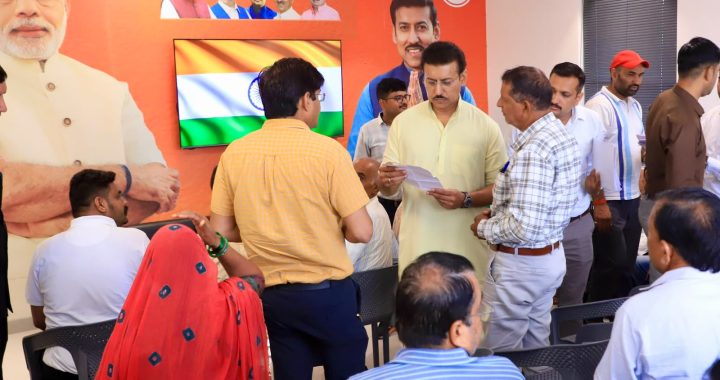
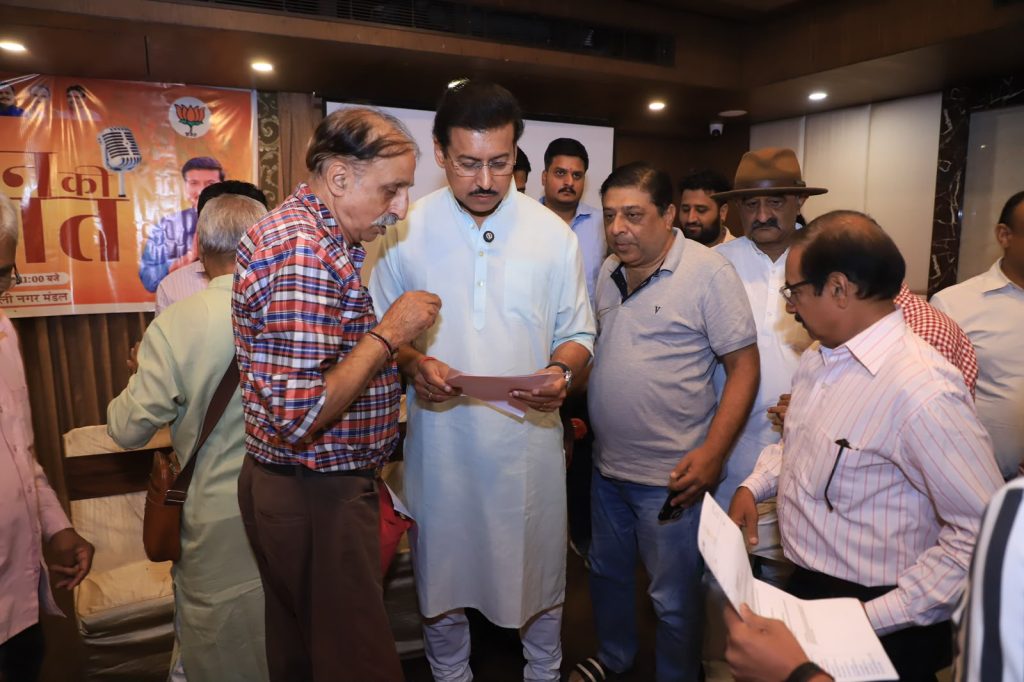
Under the leadership of the Industry Ministry, administrative teams conduct detailed socio-economic profiling of vendor families during local registry camps. This profiling automatically maps eligible families directly to eight core central welfare schemes, ensuring they receive instant access to:
- Affordable health cover via Ayushman Bharat.
- Life and accident insurance safety nets.
- Subsidized cooking gas and nutritional food security.
Additionally, through collaborations with the Skill Development Minister Rajasthan departments, vendors are introduced to standardized food safety, cleanliness, and hygienic handling practices, instantly raising the commercial value of their local stalls.
Local Micro-Capitalism: Nurturing a ‘Viksit Jhotwara’
This focus on uplifting the smallest economic contributors is clearly visible inside individual legislative assembly zones. As the sitting Jhotwara MLA, Col. Rathore’s local teams have actively run public welfare integration centers across neighborhoods to ensure that zero middlemen interfere with a vendor’s financial application.
By taking formal banking services directly to regional vendors and setting up quick-clearance credit camps, the local administration is turning the dream of a self-sufficient Viksit Jhotwara into a repeatable, reality-based blueprint.
The Final Takeaway
PM SVANidhi has outgrown its identity as just a micro-loan platform. It has transformed into a comprehensive movement centered around dignity, financial identity, and institutional recognition for the urban poor. By removing high-interest traps and replacing them with transparent digital banking, the state is ensuring that Jaipur’s street vendors don’t just survive on the margins; they build a resilient foundation for their future.
To read detailed structural breakdowns of ongoing industrial incentives, track upcoming localized welfare registration camps, or download policy manuals, explore the official updates feed at rajyavardhanrathore.in.