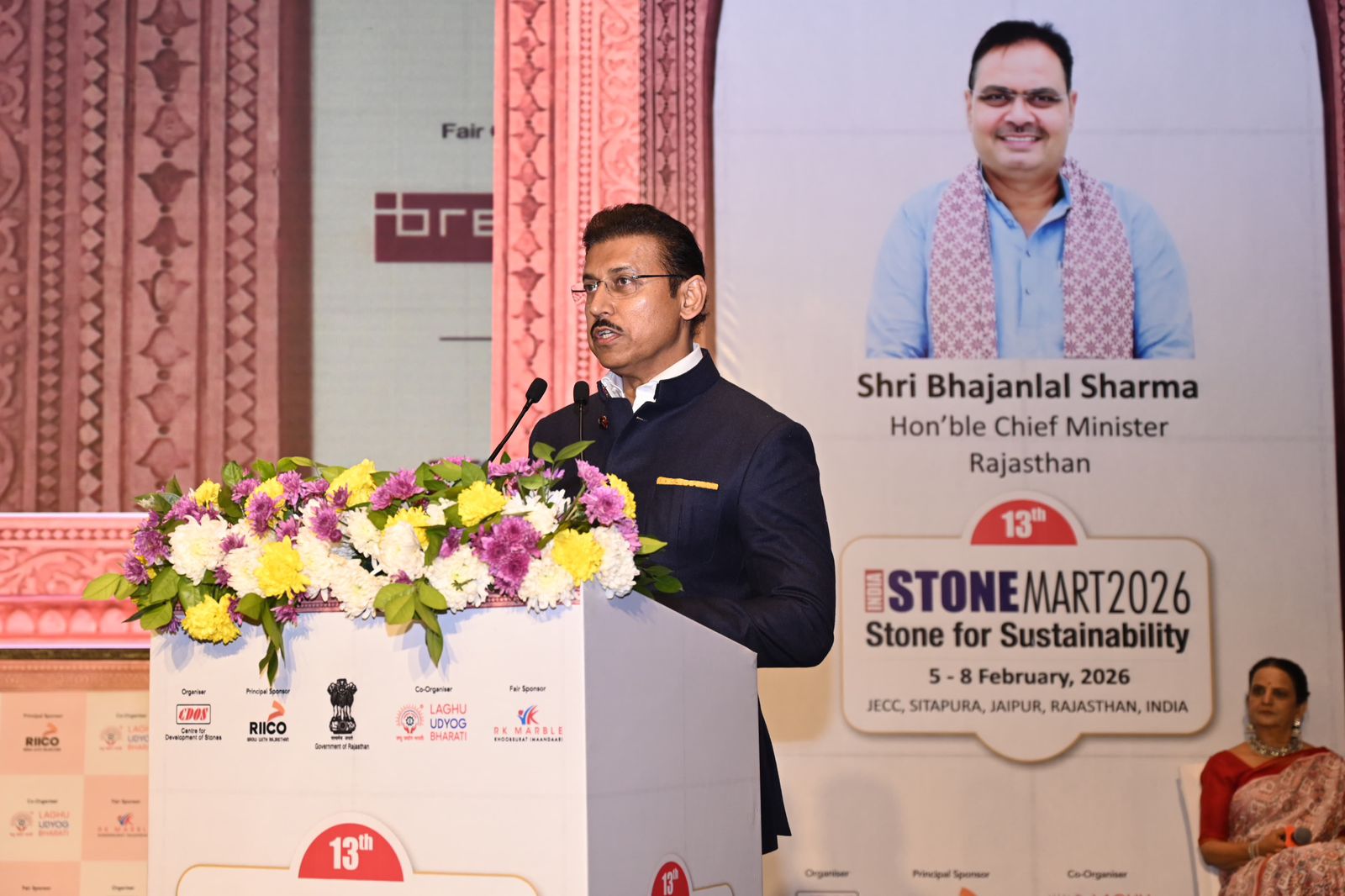
Water scarcity has become one of the most pressing challenges for industrial regions across India. In states like Rajasthan, where natural resources must be used with care, industries are being forced to rethink how they grow. This concern formed the foundation of a recent message delivered by Rajyavardhan Singh Rathore, urging stone industry leaders to shift toward smarter and more sustainable practices.
Why Water Efficiency Matters Today
The stone and mining sector plays a major role in Rajasthan’s economy. It provides employment, supports exports, and strengthens allied industries. However, it is also water-intensive. With groundwater levels declining and climate variability increasing, unchecked industrial water usage can threaten both livelihoods and long-term growth.
Government data and environmental assessments have repeatedly highlighted the need for technology-driven solutions rather than blanket restrictions. This is where leadership and policy clarity become crucial.
Rathore’s Vision: Growth Without Resource Stress
Col. Rathore’s message to industry leaders was direct but balanced:
industrial growth must continue, but not at the cost of future generations.
His leadership approach focuses on:
- Encouraging adoption of water-efficient machinery
- Promoting recycling and reuse of industrial water
- Supporting technology upgrades instead of penal action
Rather than framing sustainability as a burden, he positioned it as a competitive advantage for Rajasthan’s stone industry in national and global markets.
Policy Direction and Government Support
The Rajasthan government has been aligning industrial policy with sustainability goals by:
- Facilitating technology upgrades through industrial support frameworks
- Encouraging modern processing units with lower water consumption
- Integrating sustainability benchmarks into long-term industrial planning
These steps reflect a shift from compliance-based regulation to partnership-based governance, where industries are treated as collaborators in development.
How This Benefits Industry and Citizens
For industry leaders, water-efficient technology reduces operational risk and improves global acceptance of Rajasthan stone products. For citizens, it protects local water resources and ensures that industrial development does not disrupt agriculture or daily life.
This balance between economic growth and environmental responsibility strengthens trust in governance and policy intent.
Looking Ahead
Sustainability will increasingly define industrial competitiveness. Rajasthan’s stone industry, supported by clear leadership and policy direction, has the opportunity to become a national example of responsible growth.
For detailed insights into industrial policy direction and sustainability initiatives, readers can explore the official updates available on the official website of Rajyavardhan Singh Rathore.
Citizens and industry stakeholders are encouraged to stay informed about sustainable industrial practices and policy developments through official public platforms and verified government communication channels.