India has only 78 women MPs in the Lok Sabha today. That is around 14% — below the global average, and far behind countries like Rwanda, Mexico, and even Nepal, which already use electoral quotas. The Nari Shakti Vandan Adhiniyam, passed in 2023, promised to change that — but only after a census and delimitation exercise that could delay everything to 2034.
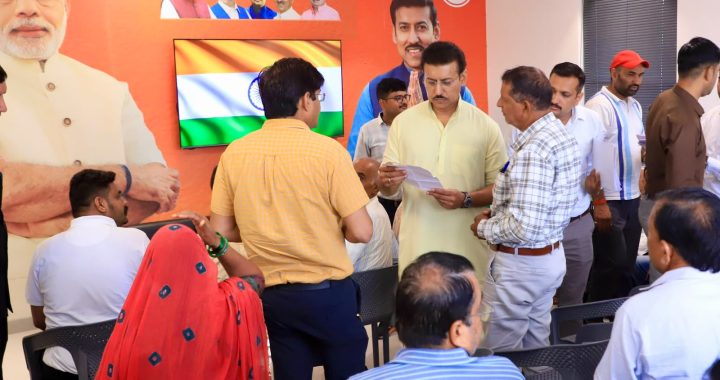
That is the problem Col. Rajyavardhan Rathore spoke about when he addressed a press conference in Srinagar on April 23, 2026. His message was clear: the Modi government tried to bridge that gap with three new bills in Parliament on April 16 — the Constitution (131st Amendment) Bill, the Delimitation Bill 2026, and the UT Laws Amendment Bill — specifically to make 33% women’s reservation a reality by 2029, not 2034.
What the Bills Were Trying to Do
The 2023 Nari Shakti Vandan Adhiniyam is a law. But it cannot activate itself. It needs delimitation — the redrawing of constituency boundaries — to happen first. And delimitation needs census data. The last usable census was 2011. The next one finishes in 2027. Add another 12–18 months for delimitation, and the math clearly pushes implementation past 2029 unless something changes.
The April 16, 2026, bills proposed to change exactly that — use 2011 Census data immediately to begin delimitation, increase Lok Sabha seats from 543 to 850, and reserve 283 of those seats for women. No state would lose seats. Every state would gain proportionally. And for the first time, 33% of Parliament would be women by 2029.
Why Rathore’s Voice Matters Here
Col. Rathore has been consistent on this issue. At the Srinagar press conference, he noted that women’s reservation has been discussed since 1996, introduced six times and blocked six times before 2023. His argument: the difference between talking about it and actually doing it is political will. “The Modi Government does what it says,” he said. “When we brought the bill, it was clear we wanted to implement it.”
He also highlighted an important nuance that gets lost in the noise: the opposition’s demand to add OBC sub-quotas is not an objection to women’s reservation — it is a method to delay it. “Getting stuck on this is just a reason to stall,” he said. SC/ST women were already covered in the 2023 law. Parliament can debate OBC inclusion without using it as a condition to block implementation.
The current status: The Constitution (131st Amendment) Bill failed in the Lok Sabha on April 17, 2026 — 298 voted for, 230 against, falling 54 votes short of the two-thirds majority needed. Implementation is now tied to the post-2026 census, likely pushing reserved seats to 2034 or later. Col. Rathore’s message from Srinagar was directed squarely at this outcome.
For anyone who follows Col. Rathore’s thoughts on governance and public accountability, his stand here is consistent with his core belief: India’s institutions get stronger when the right people are given their rightful seat at the table. For women in Indian democracy, that seat has been promised — and is still waiting. Follow his latest updates here.