The rapid rise of modern technology has pushed governance to a critical turning point. Leading this change is Rajasthan’s dynamic Rajasthan IT Minister, Col. Rajyavardhan Singh Rathore. At the newly concluded 29th National Conference on e-Governance (NCeG) held in Jaipur, the state unveiled its progressive Rajasthan AI/ML Policy 2026.
While the conference heavily emphasized building an AI-enabled, data-driven framework, Col. Rathore sent a clear and firm message to the tech community: Technology must serve as a tool to empower citizens, not an absolute replacement for human empathy and accountability. From serving on the military frontlines to navigating artificial intelligence, the Minister’s vision explains why human oversight remains non-negotiable for the future of Rajasthan.
The Transition: From Military Discipline to Digital Transformation
Col. Rajyavardhan Singh Rathore’s leadership style is rooted in his background as an army veteran and Olympic medalist. Whether managing public concerns or implementing new technology, his focus remains on duty and the protection of the community.
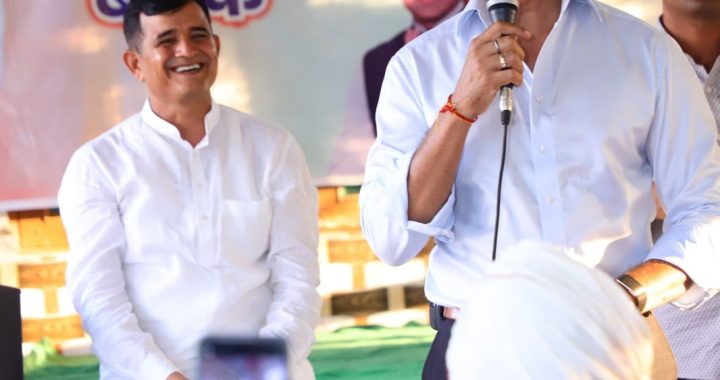
During a recent public interaction in his Jhotwara constituency—where he gathered with residents to listen to the 135th episode of Prime Minister Narendra Modi’s Mann Ki Baat—the sports minister of rajasthan connected national defense with digital safety. He noted that while India has built strong security “from the seas to the skies,” internal social and digital systems require the same level of disciplined oversight.
As the state transitions toward automated governance under the new 2026 tech guidelines, Rathore argues that a machine cannot understand human struggle. This is precisely why human judgment must guide automated systems.
Why Humans Must Lead the AI Era in Rajasthan
The core framework of the Rajasthan AI/ML Policy 2026 focuses heavily on “Responsible AI.” The policy explicitly integrates transparency, fairness, privacy protection, and algorithmic bias mitigation. Col. Rathore’s insistence on keeping humans at the center of technology stems from three major real-world factors:
1. Preventing Bureaucratic Exclusions
In welfare-driven governance, minor data discrepancies can lead an algorithm to mistakenly deny essential benefits to an eligible family. A machine operates strictly on binary code, but human officials can recognize errors and step in to correct them. Col. Rathore maintains that public systems must protect vulnerable citizens from automated errors.
2. Enhancing Public Safety and Accountability
During his Mann Ki Baat address, the Minister highlighted central safety nets like the Pradhan Mantri Suraksha Bima Yojana (PMSBY), which secures over 58 crore individuals across India. He pointed out that while digital infrastructure makes enrolling in these insurance programs seamless, it takes human leadership and localized community drives to educate.
3. “Serve Faster, Serve Smarter”
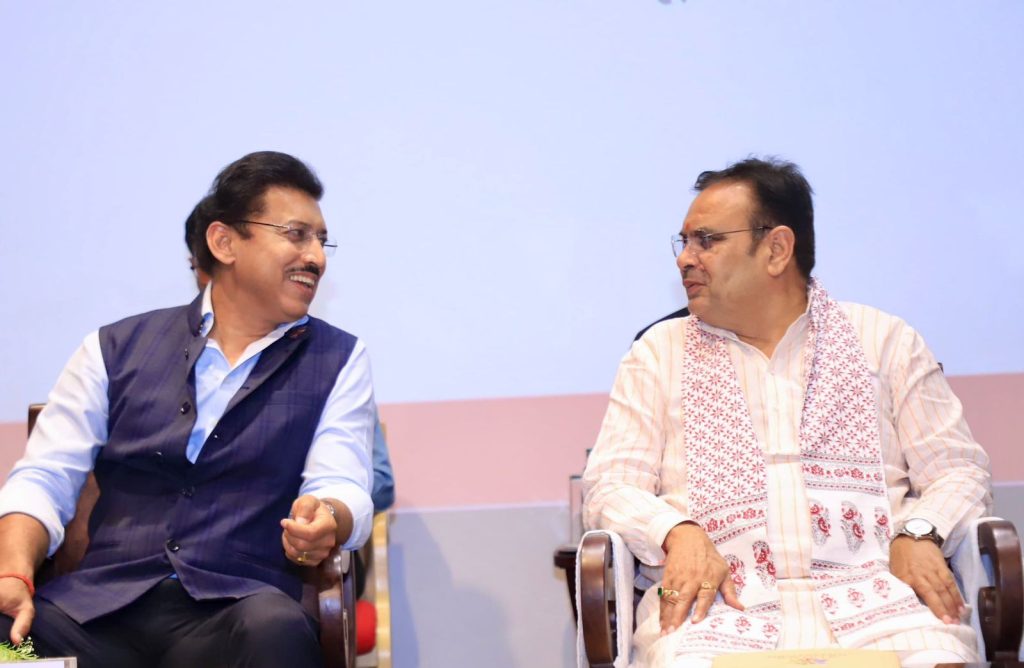
Speaking at the e-Governance conference in Jaipur, the Rajasthan IT Minister stated that modern administrations must move past outdated, slower processes. His core focus is to deploy technology that brings public services directly to a citizen’s doorstep, eliminating the need to visit government offices. However, he emphasized that this efficiency is driven by the human desire to serve the public better.
The Vision for ‘Viksit Jhotwara’ and Beyond
The digital changes happening across the state are showing clear results locally. According to recent Jhotwara development news, digital initiatives are scaling up quickly. High-speed internet network expansions have already linked thousands of government centers, making public service delivery seamless.
By ensuring that artificial intelligence is balanced with human oversight, Col. Rajyavardhan Singh Rathore is creating a sustainable model for development. His approach proves that true technical progress isn’t about replacing human workers with algorithms; it is about empowering public institutions with the right digital tools to serve people safely, transparently, and effectively.