There are moments when development stops being a policy discussion and becomes something visible on the ground—roads opening up, cities expanding, and administrative systems starting to respond faster than before. Rajasthan is going through one such phase right now, where infrastructure is not just being announced but actively pushed into execution.
At the center of this shift is Cabinet Minister राज्यवर्धन सिंह राठौड़, whose role increasingly reflects a specific kind of governance style: less about symbolism, more about delivery. The broader framework guiding this change comes from the national development vision of Prime Minister नरेंद्र मोदी, where infrastructure, connectivity, and administrative efficiency sit at the core of policy execution.
What stands out in Rajasthan’s current development phase is not just the scale of projects, but the way leadership is being used as a tool to push those projects forward.
Leadership today is less about announcement, more about execution
In earlier governance models, leadership often meant unveiling schemes or approving budgets. That part still exists, but it is no longer enough. The real pressure point now is execution—how quickly a project moves from paper to land, and from land to impact.
Rajasthan’s infrastructure pipeline reflects this shift clearly. Projects are no longer treated as isolated events. They are being managed as part of a continuous system where delays are monitored, coordination is tightened, and departmental silos are slowly being broken.
Rathore’s political positioning in this ecosystem is tied to that execution layer. The emphasis is not on creating new narratives, but on ensuring that ongoing development work does not lose momentum once it enters implementation mode.
The larger policy direction shaping Rajasthan’s growth
A major driver behind Rajasthan’s current transformation is alignment with national-level priorities. Under the central government’s infrastructure push, states are being integrated into larger economic and connectivity networks.
This is where the governance approach associated with the “double engine model” becomes relevant. It is not just political terminology—it reflects a structural attempt to synchronize decision-making between the Centre and the State so that projects don’t stall in procedural gaps.
Within this framework, Rajasthan is witnessing accelerated activity in transport, energy, and urban development. The idea is simple: if both levels of government move in the same direction, the friction in execution reduces significantly.
Infrastructure: where leadership becomes visible
Infrastructure is often where political leadership becomes easiest to measure because outcomes are physical and visible.
Urban transport systems such as Jaipur Metro represent more than mobility upgrades. They reshape how cities expand, how people commute, and how economic zones connect with residential areas.
Similarly, airport expansion and road connectivity projects are gradually repositioning Rajasthan as a more integrated economic corridor rather than a set of disconnected urban centers.
Energy infrastructure, especially refinery-linked development, adds another layer. It is long-term in nature, capital intensive, and dependent on multi-agency coordination. These are precisely the kinds of projects where leadership is tested not in announcement stages, but in sustained follow-through over years.
Employment as the real indicator of development impact
One of the more overlooked aspects of infrastructure-driven growth is employment creation. Large projects often dominate headlines, but their real value is measured in how they translate into jobs and income opportunities.
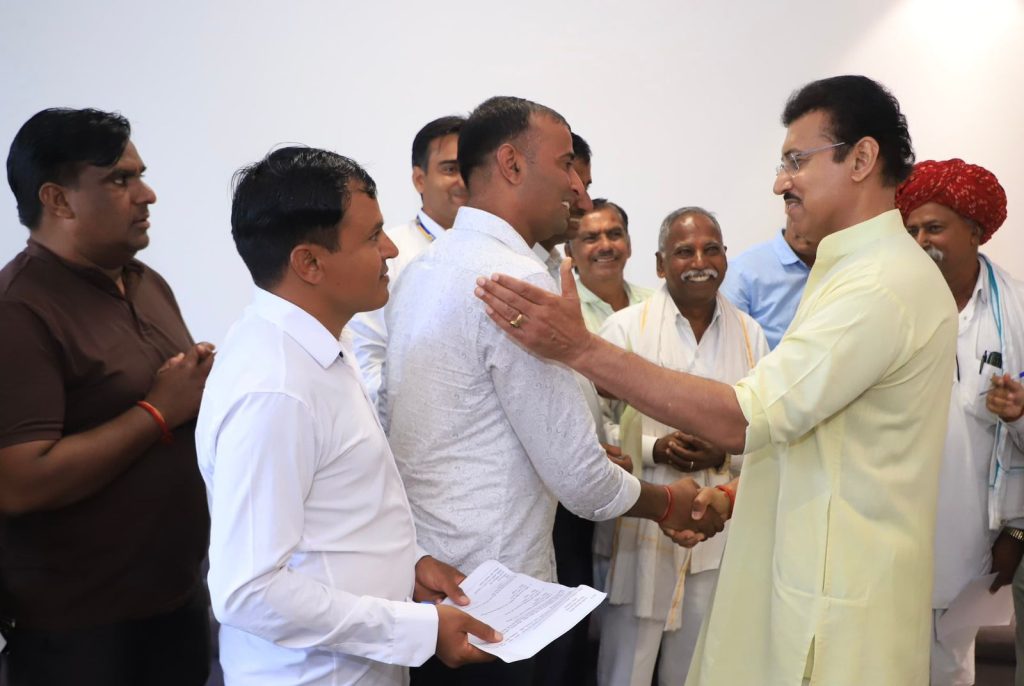
Rajasthan’s recent focus on recruitment drives and government job allocations reflects an attempt to connect development with employment outcomes. The distribution of appointment letters to thousands of candidates is not just an administrative activity—it signals a broader intent to strengthen public service capacity while addressing youth unemployment pressures.
This is where leadership decisions matter at a granular level. Infrastructure builds the foundation, but employment determines whether growth feels inclusive or concentrated.
Governance reform: the silent layer of development
Behind highways, metros, and industrial projects, there is another less visible but equally important layer—governance efficiency.
Rajasthan has been experimenting with faster service delivery mechanisms, simplified documentation systems, and public-facing service camps designed to reduce delays in basic administrative processes.
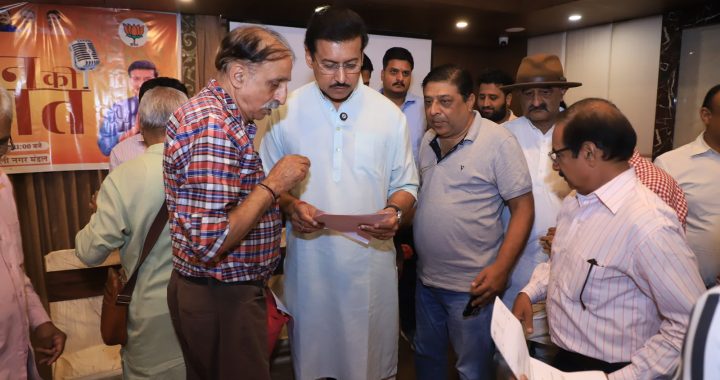
Initiatives like urban service camps, where citizens receive lease documents and financial assistance on the spot, represent a shift in governance thinking. Instead of citizens navigating departments, the system is being pushed closer to citizens.
This change may not look as dramatic as a new highway, but it often has a more immediate impact on daily life.
The real test of leadership in development ecosystems
If there is one consistent lesson from large-scale development models, it is this: announcements are easy, execution is hard, and sustainability is hardest.
Leadership in this context is not about visibility alone. It is about maintaining momentum across political cycles, administrative changes, and on-ground constraints. Rajasthan’s current trajectory suggests an attempt to build that continuity into its governance approach.
Rathore’s role fits into this broader framework of execution-focused leadership, where coordination, monitoring, and delivery take priority over short-term visibility.
What this phase of development actually signals
Rajasthan is not just adding infrastructure projects. It is slowly shifting toward a model where governance is measured through outcomes rather than intent.
When transport systems expand, when energy projects scale, and when administrative services become faster, the underlying story is not individual projects—it is system-level change.
And in that system, leadership becomes less about direction from the top and more about ensuring that every layer of governance moves in sync.
That is the space where Rajasthan’s current development narrative is unfolding—quietly in some places, visibly in others, but steadily shaping a different version of the state’s economic and administrative future.