Rajyavardhan Rathore and the Road to Athens 2004
Before becoming an Olympic medallist, Rathore had already built an impressive record in international shooting. His preparation for elite competition reflected the discipline associated with his military background.
His performance in the years immediately before Athens showed that the Olympic medal was not an overnight success. He had won a silver medal at the 2003 World Championship and was Asian champion from 2003 to 2004. His international performances established him as one of the leading double-trap shooters heading into the Athens Games.
By 2004, Rathore was ranked No. 1 in the world, making him one of India’s strongest medal prospects at the Olympics.
What Happened at the Athens Olympics?
At the Athens 2004 Olympic Games, Rathore competed in the men’s double trap shooting event. The discipline demands exceptional concentration, timing and consistency because competitors must react to moving targets with split-second precision.
Rathore delivered a performance strong enough to secure the silver medal for India. According to his official biography, the achievement was India’s first individual Olympic silver medal and marked a historic breakthrough for Indian shooting.
The medal was significant beyond the podium. It demonstrated that Indian athletes could compete successfully in disciplines outside the country’s traditional Olympic strengths.
Why Was Rathore’s Silver Medal Historic?
The significance of Rajyavardhan Rathore’s Athens medal lies in what it represented for Indian sport.
His silver became India’s first individual Olympic silver medal. It also helped bring greater national attention to shooting as a competitive sport and inspired a generation of athletes to pursue international success.
The achievement also added to a growing list of international results. Rathore had won gold at the 2002 Commonwealth Games and later added another Commonwealth Games gold in 2006. His official profile records 26 international medals for India across his shooting career.
His success therefore represented not an isolated achievement, but the culmination of years of elite-level competition.
A Career Built on Precision and Discipline
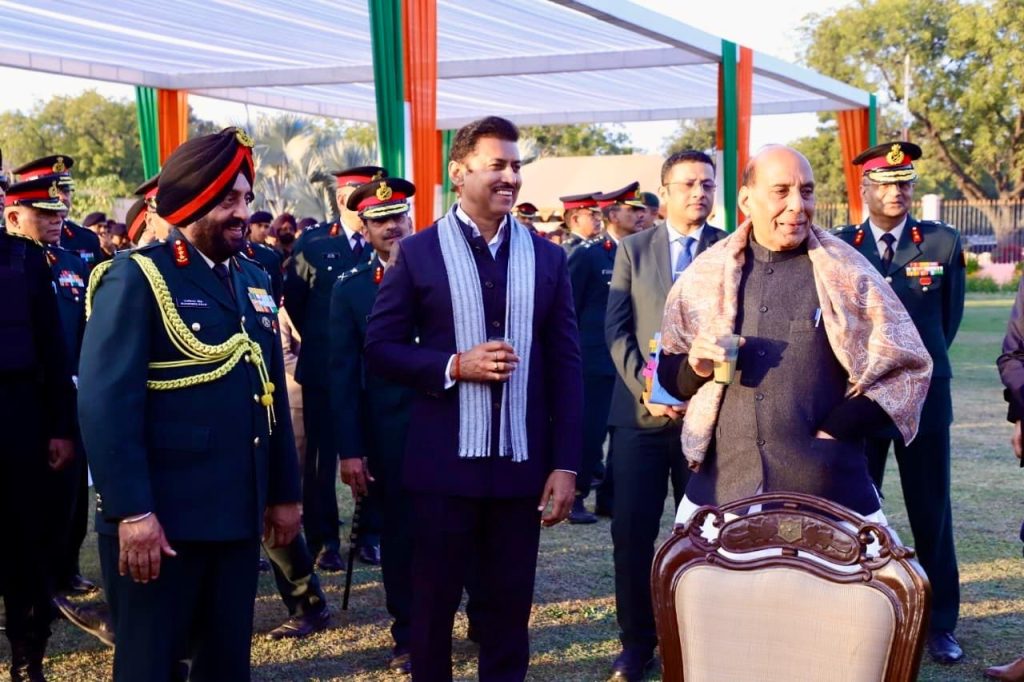
Rathore’s sporting career was closely connected to his military discipline. His official biography records more than two decades of service in the Indian Army, including assignments involving counter-terrorism operations and the Kargil conflict.
That background shaped the qualities that became central to his shooting career: concentration under pressure, preparation, composure and an ability to perform when the stakes were highest.
His journey from soldier to Olympic medallist became an example of how sporting excellence can emerge from discipline developed far beyond the sporting arena.
From Olympic Podium to National Leadership
The Athens silver medal became an important chapter in Rathore’s wider public life. He was awarded the Major Dhyan Chand Khel Ratna Award in 2004, India’s highest sporting honour, and received the Padma Shri in 2005. His official biography also notes that he later served as India’s flag bearer at the Beijing 2008 Olympics.
Following his military and sporting career, Rathore entered public life. His official website describes his subsequent journey through government and parliamentary roles, eventually including his representation of the Jhotwara constituency.
For readers interested in his complete journey, the official Rajyavardhan Rathore profile provides information about his sporting, military and public-service career.
The Legacy of Athens 2004
More than two decades later, the Athens silver remains an important milestone in Indian Olympic history. Rathore’s achievement helped establish shooting as a sport in which Indian athletes could aspire to the highest international honours.
His official website continues to highlight Athens 2004 alongside his other major sporting achievements, including World Cup victories, Commonwealth Games medals and his world-record performance in double trap shooting.
For those exploring his wider achievements, the official Rajyavardhan Rathore website provides additional information and a timeline of his sporting career.
Frequently Asked Questions
1. What medal did Rajyavardhan Singh Rathore win at the Athens Olympics 2004?
Rajyavardhan Singh Rathore won the silver medal in men’s double trap shooting at the Athens 2004 Olympic Games. It was India’s first individual Olympic silver medal.
2. Why is Rajyavardhan Rathore’s Athens medal important?
His silver medal was historic because it became India’s first individual Olympic silver medal and represented a major breakthrough for Indian shooting.
3. Which shooting event did Rathore compete in at Athens 2004?
He competed in men’s double trap shooting, a discipline requiring precision, concentration, and rapid target acquisition.
4. Did Rajyavardhan Rathore win other international medals?
Yes. His official profile records numerous international medals, including Commonwealth Games gold medals in 2002 and 2006, as well as World Cup and World Championship medals.
5. Where can I read more about Rajyavardhan Rathore?
More information about his Olympic career, military service, and public life is available on his official website.
Conclusion
Rajyavardhan Singh Rathore’s Athens Olympics 2004 silver medal was a defining moment for Indian sport. With exceptional focus and composure, he achieved a historic podium finish in double trap shooting and gave millions of Indians a reason to celebrate.
His journey—from military service to the Olympic podium and later public leadership—continues to represent the values of discipline, determination and service. Athens 2004 was not simply a medal-winning performance; it was a milestone that helped inspire India’s next generation of Olympic ambitions.