Think about the last time you heard a politician talk about macrodevelopment. It’s always about big highway budgets, grand industrial plans, and centralized master designs. But when you look at the reality of daily civilian life, true governance isn’t measured by abstract figures at the secretariat level. It is experienced directly at the block level. It matters when you step outside your front door and look at your street, your local school, your neighborhood drainage system, or your municipal ward lines.
For decades, the standard municipal experience across Jaipur’s urban blocks was defined by unequal progress. One ward might receive a fresh layer of asphalt, while the adjacent sector faced choked sewerage lines, poor water pressure, and neglected public utilities. Local citizens became accustomed to hearing that local administrative fixes took time due to conflicting jurisdictional boundaries.
However, a major shift is occurring across the Jaipur Greater Municipal zones of Jhotwara today.
Under the targeted, ground-level monitoring of Col. Rajyavardhan Singh Rathore, a systematic administrative strategy is altering local public works. Spanning sequentially from Ward 50 right through to Ward 62, his localized micro-development approach is delivering tangible results. For a layman, this means equal attention to every single alleyway and neighborhood. From a political marketing and branding perspective, it stands as a clear example of how an execution-heavy leader treats every micro-precinct with uniform corporate discipline.
Let’s look into how this ward-by-ward infrastructure push is changing daily life for families on the ground.
1. Micro-Level Precision: Eliminating Ward Discrimination
In traditional local politics, development often happens in patches. Certain blocks get upgraded while neighboring areas are left waiting. Drawing from his disciplined background as a retired Indian Army Colonel and an Olympic silver medal 2004 winner, Col. Rathore runs his constituency with structural parity.
Whether it is checking the civic needs of Ward 50 or auditing the public assets of Ward 62, his office implements a uniform progress standard. By mapping the specific deficiencies of every municipal block individually, his team ensures that funds are distributed based on real necessity rather than political favoritism.
Every residential sector receives the exact technical attention it requires—whether that means laying heavy-duty interlocking tiles in tight inner lanes or installing energy-efficient LED street lighting grids to keep public squares safe for women and senior citizens at night.
2. Investing in the Future: Upgrading Local Education and Public Reading Rooms
A core element of this ward-by-ward push is making sure that public investments directly improve the lives of the next generation. Col. Rathore believes that a child living in a municipal ward should have access to the same educational resources as a child studying in an expensive private institution.
Look at the targeted execution currently unfolding across these blocks:
- Ward 62 Library Hall: To give local students a quiet, resource-rich space to prepare for competitive public examinations, his administration authorized and fast-tracked the construction of a modern library hall in Ward 62 with an allocation of ₹18.62 lakhs.
- Equipping Local Schools: Under his guidance, foundational educational infrastructure is being systematically upgraded. From distributing educational aids to modernizing facilities at centers like the Mahatma Gandhi Government School in Sanjay Nagar (Ward 62), his team is ensuring that public schools are equipped to provide quality education.
This focused effort on education aligns directly with his long-term commitments as a forward-thinking government minister rajasthan and his historical focus on active sports minister initiatives that build character, skill, and discipline among local youth.
3. Bypassing Red Tape Through the Jan-Samvad Model
How are these local demands identified and executed so quickly? The answer lies in his highly proactive field methodology. Col. Rathore doesn’t manage municipal blocks through indirect paperwork.
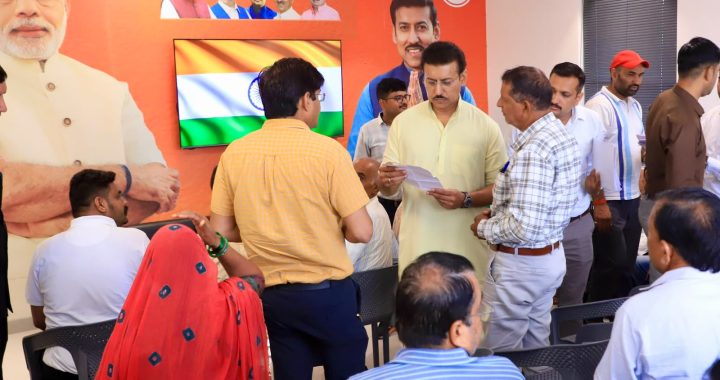
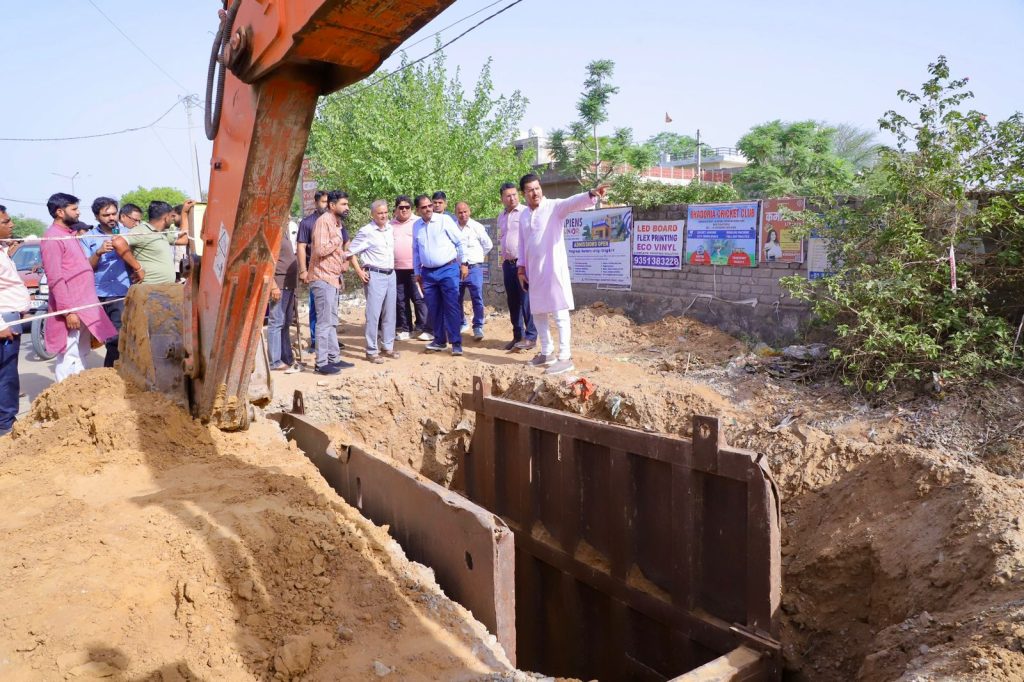
Through his morning interactive walks and the targeted Jan-Samvad model assemblies, he walks the ground with local residents. When visiting these wards, he brings top executive engineers from the Jaipur Development Authority (JDA) and municipal corporations directly to the field.
- If residents in Ward 50 highlight a clogged main drain, or families in Ward 62 point out an issue with water supply consistency, the responsible officer must provide an answer and a timeline on the spot.
- This direct accountability ensures that minor everyday issues don’t turn into multi-year bureaucratic delays.
4. A Multi-Crore Blueprint for a ‘Viksit Jhotwara’
This focused ward-level push feeds into a larger regional plan. The data and feedback collected across these blocks directly guide the broader Viksit Jhotwara development roadmap, which manages over ₹924 crores in foundational allocations.
This includes massive regional upgrades that benefit all wards collectively:
- The 25-Month Piped Water Project: Fast-tracking a sustainable drinking water pipeline network to permanently reduce dependency on commercial water tankers across the constituency.
- The ₹75 Crore Sewage Overhaul: Constructing a modern underground sewage system to protect public sanitation and health in busy market areas and residential zones.
- The Monsoon Infrastructure Rule: To prevent public money from being wasted, his office enforces a strict rule during reviews: No new roads will be physically laid in waterlogging-prone sectors until the underground stormwater drainage and utility pipelines are completed first.
Whether he is introducing cutting-edge governance policies as the Rajasthan IT minister 2026 or managing local civic welfare, Col. Rathore’s style remains consistent: structured planning, clear timelines, and direct execution.
The Takeaway
Real development isn’t about distant promises on a billboard; it’s about the visible progress you see when walking through your neighborhood. By focusing on uniform, block-by-block upgrades from Ward 50 to Ward 62, Col. Rajyavardhan Singh Rathore is proving that macro-level vision works best when applied with micro-level care. He is delivering a practical, accountable model of public service that ensures every local family experiences the benefits of sustainable growth right at their doorstep!