Have you ever stood on a train station platform, watching an express train speed right past your small town without stopping? For years, residents in and around Jobner and Dhindha experienced this exact frustration. Daily commuters, students traveling to colleges, and small traders bringing goods to market had to take long, expensive detours just because the right trains wouldn’t halt at their local stations.
In public life, it is often said that the grandest projects get the most attention, but it is local connectivity that changes everyday lives.
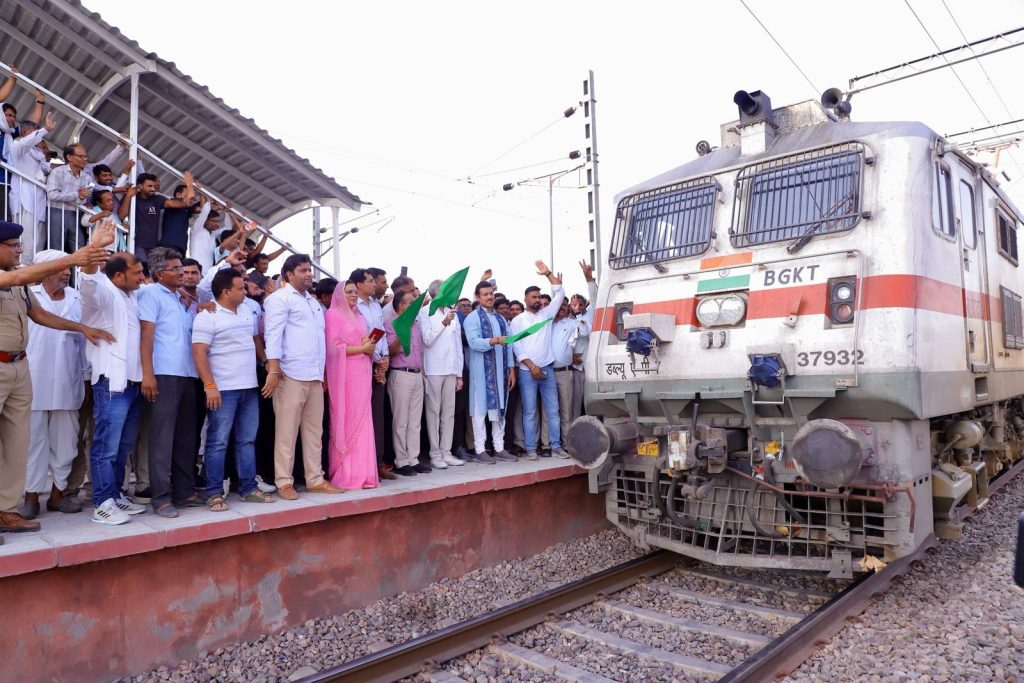
Thankfully, the era of being bypassed is over. Through the strategic and persistent efforts of Col. Rajyavardhan Singh Rathore, a series of critical train stoppages—including the highly requested stops at Jobner-Asalpur and Dhindha stations—have been officially approved and put into action.
For a layman, a train schedule change might seem simple. But from a strategic standpoint, this rail initiative is a masterclass in how targeted local connectivity drives a massive wave of grassroots economic growth.
1. Breaking the Isolation: Why Every Stop Counts
When a fast-moving train finally slows down and halts at a local station, it does much more than drop off passengers—it links a rural community directly to the state’s economic heart.
As a retired Indian Army Colonel, Col. Rathore understands logistics like an absolute professional. He knows that if a youth from a village has to spend three hours on multiple congested buses just to reach a coaching center or a job in Jaipur, that youth is at a severe disadvantage. By coordinating directly with the Union Railway Ministry to secure these critical stoppages, he has effectively brought major employment and educational hubs hours closer to home for thousands of local families.
2. A Massive Boost for Farmers and Small Traders
Connectivity is the ultimate fuel for commerce. Consider the local farmers in the rural belts of Jhotwara or the traders near the upcoming 25-acre modern agricultural market in Baseri.
Before these rail updates, transporting perishable produce or moving small-scale industrial goods meant relying entirely on costly road transport. Now, with reliable train stoppages at local stations, small businesses can ship their goods faster, cheaper, and across much longer distances. This direct access to larger markets is exactly what Col. Rathore pushes for in his executive role as the Industry minister rajasthan—cutting down hidden operational costs so grassroots entrepreneurs can thrive.
3. The Power of “Execution Over Paperwork”
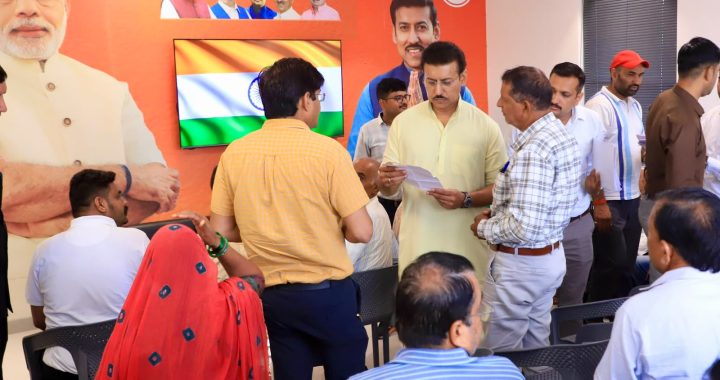
How did these long-pending railway demands suddenly turn into reality? The answer lies in Col. Rathore’s highly accessible Jan-Samvad model. During his morning community walks and local town halls, citizens didn’t just ask for grand highway promises; they asked for their local train stations to be made functional.
Instead of letting these requests gather dust in bureaucratic filing cabinets, he treated the issue as a tactical mission. This hands-on style is the core engine behind his entire Jhotwara MLA work philosophy. He bridges the gap between top-level central ministries and everyday village needs, ensuring that major national resources serve ordinary local citizens.
4. Part of a Much Bigger Vision: ‘Viksit Jhotwara’
The railway initiative isn’t an isolated fix—it is a vital pillar supporting the massive Viksit Jhotwara development roadmap.
Col. Rathore is systematically building an interconnected ecosystem where transport, technology, and health work hand-in-hand:
- Roads & Bridges: Alongside train halts, his office has fast-tracked multi-crore rural road networks and planned railway overbridges to eliminate traffic jams.
- Digital Infrastructure: As the Rajasthan IT minister 2026, he is introducing tech-driven skill programs so local youth can secure high-paying jobs without having to permanently migrate away from their connected villages.
The Takeaway
Col. Rajyavardhan Rathore is proving that true governance is measured by how easy it is for a common citizen to travel, work, and grow. By transforming local railway stations into active gateways of opportunity, he is showing the entire state that no village is too small to be left off the map of progress. Jhotwara is moving forward, and this time, the train is stopping for everyone.